I tend to think about Lazarus,
how Jesus rose a dead man of three days
how he must have smelled his wrappings wet and molding,
skin eating itself
face sallow,
eyes drooping, murky
Would Lazarus’ skin rot fig trees,
as he walks through his daily life once again
through the market
rags overpowers the hanging citrus
What trauma would he have,
trauma of going to hell and back
sees death right between his eyes
He looks the devil in the eye
he has lain with the enemy
Would he ever sleep with his wife again
would she caress his skin
or smooth his hair
Would his body ever be whole
I can see Lazarus,
he sits alone,
wishes he were dead,
curses the son of God
He knows why one of ten went back,
not a blessing in disguise,
a curse disguised as a blessing
Longing for the sweet release of death,
coming was so good the first time
let him lick it again
Here is his second chance
life is worse
can people become worse,
people became worse
you would think questions would have been answered,
he is left with shattered pieces,
and no glue
I have seen death
I have laid down
I have lived my life
Let me lie
Oh God!
let me lie
Mari Huglin is a current undergraduate senior with majors in International Affairs, English Literature, and History. She is from Oregon and enjoys writing about literature, politics, film, and cycling with some creative poetry on the side.
Huglin says about the piece: “‘Lazarus’ is a meditation and commentary on the miracle, observing what Lazarus may have thought.”
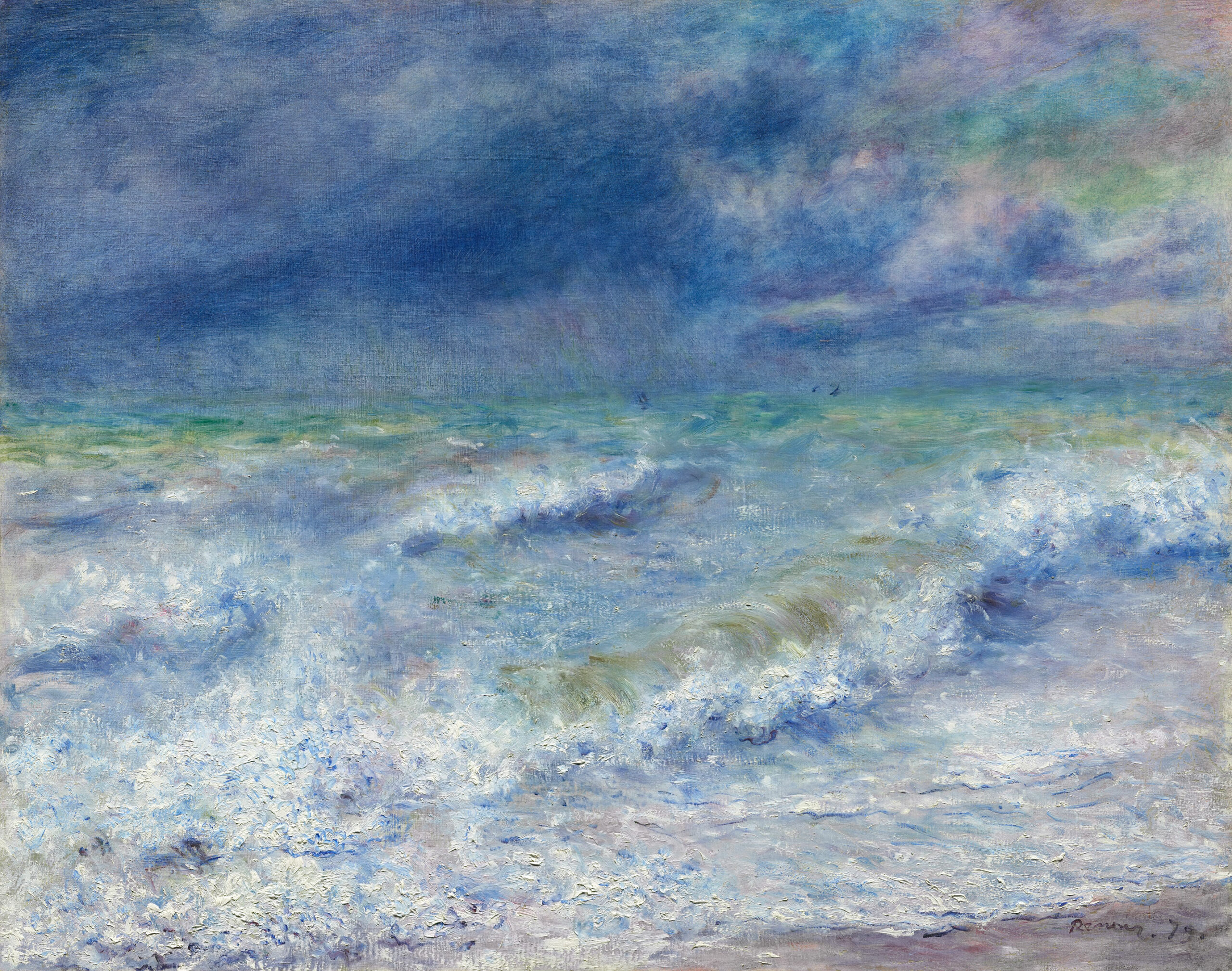
“Seascape”, Pierre-Auguste Renoir (1879).